Choosing the Right Water Treatment System for a Cleaner, Better Home
Water is one of those everyday things we rarely stop to think about. We turn on the tap, fill a glass, wash vegetables, take a shower, and get on with the day. It feels ordinary because it is always there. But when the water starts tasting strange, leaves chalky marks on fixtures, or makes you question what’s actually flowing through your pipes, it suddenly becomes a very different story.
For homeowners, improving water quality isn’t necessarily about buying the biggest or most expensive system available. It’s about understanding what is happening with the water in your particular home and choosing treatment that makes sense.
Every property is a little different. Water sources vary. Plumbing systems vary. Household habits vary too. A family of two doesn’t use water in quite the same way as a family of six with frequent laundry, multiple bathrooms, and a garden that seems to need watering every other day.
So, where should you begin?
Start With the Water You Actually Have
Before shopping for treatment equipment, get familiar with your water. This sounds obvious, but it’s an easy step to skip.
Some homes have hard water caused by naturally occurring minerals. Others may experience sediment, unpleasant odors, unusual taste, staining, or concerns about specific contaminants. Private well water can present a different set of considerations compared with treated municipal water.
Testing can help identify the issue instead of leaving you to guess.
This is important because water treatment isn’t a one-size-fits-all game. A filter designed to address sediment won’t necessarily solve hardness, and a system intended to improve drinking water may not be suitable for treating the entire house.
In other words, don’t buy the solution before you understand the problem.
Hard Water Can Create Everyday Frustrations
If you’ve ever cleaned a shower and watched white mineral spots return a few days later, you already know how annoying hard water can be.
Hard water contains minerals, particularly calcium and magnesium. These minerals aren’t always visible when you’re filling a glass, but they can leave deposits on faucets, showerheads, dishes, and appliances. Soap may also struggle to lather properly, and freshly washed clothes can sometimes feel less soft than expected.
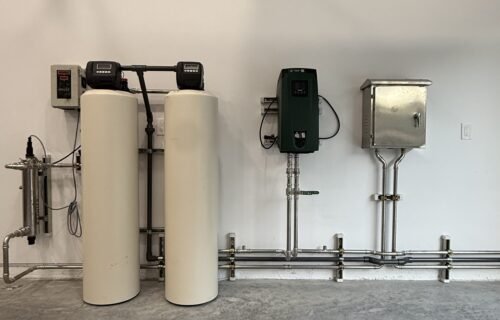
For households dealing with these problems, Water Softeners can be an effective way to address hardness. Rather than simply filtering water, a softener is designed specifically around reducing hardness minerals.
The result can be noticeable in surprisingly small ways. Cleaning may become easier. Fixtures may stay cleaner for longer. Soap and detergent can work more effectively. Even the feel of water during a shower can change.
Of course, the system needs to be properly sized for the household. Installing equipment that’s too small can create performance problems, while choosing something much larger than necessary may mean spending money you didn’t need to spend.
Drinking Water Is a Different Conversation
Whole-house water treatment and drinking-water treatment aren’t always the same thing.
Many homeowners are primarily concerned about the water they drink and cook with. If that’s your main priority, a point-of-use treatment system can make practical sense.
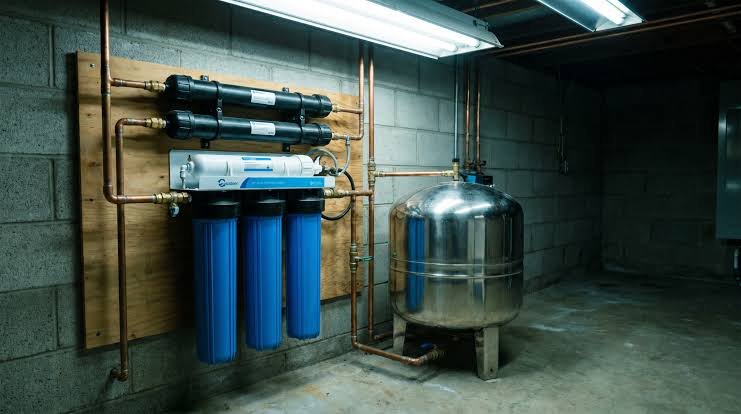
A reverse osmosis system is one technology commonly considered for drinking-water applications. Reverse osmosis uses a specialized membrane and other filtration stages to reduce certain dissolved substances from water.
It can be particularly useful when homeowners want an additional level of treatment at a kitchen faucet. Depending on the system and source water, it may improve taste and reduce specific contaminants.
But there’s an important detail people sometimes overlook: reverse osmosis isn’t a magic word. Systems differ, water conditions differ, and installation quality matters. It’s wise to understand what a particular system is designed to reduce rather than assuming every RO unit provides exactly the same results.
You should also consider maintenance. Membranes and filters have service intervals, and ignoring them can affect performance.
When You Want Cleaner Water Throughout the Home
Maybe your concerns aren’t limited to the kitchen.
If you notice sediment, odor, or other water-quality issues from several faucets, treating water only at one tap may not be enough. This is where a Whole House Water Filtration System can become an attractive option.
Installed at the main water entry point, a whole-house system is designed to treat water before it travels through the home’s plumbing. That means multiple fixtures can receive treated water rather than relying on individual filters.
There’s an obvious convenience here. You don’t need separate treatment devices attached to every sink. The approach is centralized, which can make water management simpler.
Still, whole-house filtration doesn’t mean one standard system works for every property. Filter type, capacity, flow rate, household water consumption, and the specific water-quality concerns all need to be considered.
A system that works beautifully in one home might be a poor match for another. That’s why testing and professional assessment can be valuable before installation.
Don’t Confuse Filtration With Softening
The words “filter” and “softener” are sometimes used almost interchangeably in casual conversation, but they solve different problems.
Filtration can target things such as sediment, chlorine, taste, odor, or certain contaminants, depending on the technology. Softening is specifically focused on hardness minerals.
A homeowner dealing with heavy scale might need a softener. Someone primarily unhappy with drinking-water taste may be better served by a drinking-water filter. Another household might reasonably need both.
This is why buying a system simply because a neighbor recommended it isn’t always the best strategy.
Their water might be completely different from yours.
Installation and Maintenance Matter More Than People Think
Even a high-quality system can disappoint if it’s installed incorrectly or neglected afterward.
Before choosing a provider, ask about installation, filter replacement schedules, warranty coverage, servicing, and the expected operating costs. Find out whether replacement filters are easy to obtain and whether routine maintenance can be handled locally.
It’s also worth asking how the system affects water pressure and flow. A treatment system shouldn’t make normal household activities unnecessarily frustrating.
Good companies generally explain these details without making you feel silly for asking. That’s a good sign.
Don’t Let the Price Tag Make the Decision
It’s natural to compare prices. Everyone has a budget.
But the cheapest system isn’t necessarily the least expensive option over time. If filters are costly, replacement is difficult, or the equipment isn’t appropriate for your water, the initial saving can disappear surprisingly quickly.
At the same time, the most expensive system isn’t automatically the best one either.
The sweet spot is a system that solves the actual problem, fits the home’s water usage, and can be maintained without unnecessary hassle.
Better Water Starts With Better Information
There isn’t one perfect water treatment system for every household. That’s probably the most useful thing to remember.
Start with testing. Understand the problem. Decide whether your priority is hardness, drinking water, whole-home treatment, or a combination of needs. Then compare technologies and providers based on what your home actually requires.
Water quality may not be the most glamorous home-improvement topic, but it quietly affects daily life. From the first glass of water in the morning to the final load of laundry at night, it is part of almost everything we do.
A thoughtful water treatment choice won’t necessarily change the way your home looks. It can, however, change how the water feels, tastes, and performs—and sometimes those small improvements are the ones you appreciate every single day.