Cleaner Water Starts With Understanding What’s in Your Home’s Water
There’s something easy to take for granted about water: you turn on the tap, and it’s simply there. We drink it, cook with it, bathe in it, wash clothes with it, and rarely stop to think about what’s actually moving through those pipes. But water can carry minerals, sediment, chemicals, microorganisms, and other unwanted substances depending on where it comes from and how it reaches your home. That’s why choosing the right water treatment solutions isn’t just about improving taste. It’s about understanding your water and making practical improvements that suit your household.
The tricky part is that not every water problem looks the same. Cloudy water is obvious. Hard water, however, can quietly leave white spots on faucets and slowly damage appliances. A strange smell might point to a completely different issue. In other words, there’s no one-size-fits-all answer.
Start by Finding Out What’s in Your Water
Before buying a filter or installing a treatment system, it makes sense to understand the problem first. Water testing can reveal information that your senses simply can’t.
Depending on the source, household water may contain sediment, chlorine, iron, manganese, hardness minerals, or other contaminants. Well water, for example, can have a very different profile from municipally supplied water. Even two homes in the same neighborhood may experience different issues because of plumbing conditions, building age, or local water sources.
A proper water analysis gives you a starting point. Instead of guessing, you can choose equipment based on actual needs. That can save money in the long run, too. Nobody wants to spend hundreds of dollars on a system that solves a problem they never had.
Hard Water Is More Than an Annoying White Spot
Hard water is one of those household problems people often tolerate for years. You might notice chalky deposits around the showerhead, dull-looking glassware, stiff laundry, or soap that never seems to rinse away properly.
The main culprits are usually calcium and magnesium. These naturally occurring minerals aren’t generally something homeowners need to panic about, but they can create plenty of practical headaches.
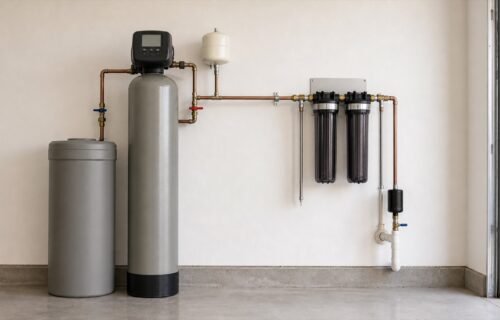
This is where water softening can make a noticeable difference. A water softener is designed to reduce hardness minerals before water moves throughout the home. Once treated, water can feel different on the skin, soap may lather more easily, and scale buildup can be reduced inside plumbing fixtures and appliances.
Think about a water heater, for instance. It works quietly in the background every day. Over time, mineral deposits can accumulate inside it, potentially affecting efficiency and maintenance needs. Reducing hardness doesn’t magically make every plumbing problem disappear, but it can help protect water-using equipment from one common source of trouble.
Filtration and Purification Aren’t Exactly the Same
People often use the words “filtration” and “purification” interchangeably, but they can refer to different treatment approaches.
Filtration generally involves passing water through a material designed to reduce particular particles or substances. Sediment filters can capture dirt and suspended particles, while activated carbon filters are commonly used to improve taste and reduce chlorine and certain organic compounds.
Water purification, meanwhile, is a broader term often associated with processes intended to address microorganisms or other specific contaminants. Depending on the technology, this may involve methods such as ultraviolet treatment, reverse osmosis, or other specialized processes.
The important thing is not to choose technology simply because it sounds advanced. A reverse osmosis system, UV unit, carbon filter, or whole-house filter can all have a place, but their usefulness depends on what you’re actually trying to remove or reduce.
Choosing Between Whole-Home and Point-of-Use Treatment
Another decision homeowners face is where treatment should happen.
A whole-home system treats water before it travels to multiple fixtures. That can be useful when the concern affects bathing, laundry, cooking, and general household use. For example, if sediment or hardness is a widespread issue, treating water at the main entry point may be more convenient than installing individual filters everywhere.
Point-of-use systems work differently. They treat water at a particular location, such as a kitchen faucet. These systems can be a practical choice when the primary goal is improving drinking and cooking water rather than treating every drop used in the house.
Neither approach is automatically better. It depends on the water quality, household size, budget, plumbing setup, and what you want treated.
Don’t Ignore Taste, Odor, or Appearance
Sometimes your water tells you something is wrong before a test does.
A rotten-egg smell, metallic taste, discoloration, or persistent cloudiness deserves attention. It doesn’t necessarily mean the water is dangerous, but unusual changes shouldn’t simply be brushed aside.
For instance, a sulfur-like smell can be associated with hydrogen sulfide, while reddish or brown staining may be connected with iron. Chlorine can produce a noticeable taste or smell in some municipal water supplies.
The right response depends on the cause. A carbon filter might help with certain taste and odor concerns, while iron or sulfur problems may require more specialized treatment. Again, testing comes first. Otherwise, you’re basically throwing darts in the dark.
Maintenance Matters More Than People Think
Installing a treatment system is only half the job. Keeping it maintained is what helps it continue doing what it was designed to do.
Filters have replacement schedules. Water softeners may need salt or other routine attention. UV systems require periodic maintenance, and reverse osmosis units contain multiple filter stages that need to be replaced at appropriate intervals.
Skipping maintenance can reduce performance and, in some cases, create new water-quality concerns. A filter that has been neglected for far too long isn’t exactly something you want sitting between your family and the kitchen faucet.
It’s also worth keeping records of filter changes, inspections, and water testing. It sounds overly organized, perhaps, but six months later you’ll be glad you wrote it down.
Professional Advice Can Prevent Expensive Guesswork
DIY water treatment has become more accessible, and there are plenty of compact systems designed for homeowners. Still, complicated water problems are often better handled with professional guidance.
A qualified water treatment professional can evaluate test results, inspect the plumbing setup, recommend suitable equipment, and explain what the system will and won’t accomplish. That last part matters. No treatment system removes every possible contaminant.
Professional installation can also help ensure that equipment is sized correctly and integrated properly with existing plumbing. A system that’s too small may struggle to meet household demand, while an unnecessarily large setup can add cost without providing meaningful benefits.
Better Water Is a Long-Term Investment
Good water quality isn’t about chasing the newest gadget or filling the basement with equipment. It’s about making informed choices based on what your household actually needs.
Start with testing. Identify the specific problem. Compare treatment methods. Consider whether you need whole-home treatment or filtration at one faucet. Then think about maintenance, installation, and long-term operating costs.
Clean, reliable water should feel ordinary. That’s really the goal. You shouldn’t have to think about it every time you pour a glass, start a load of laundry, or step into the shower. With the right approach, treating household water becomes less about fixing an annoying problem and more about quietly protecting the things that matter every day.