Choosing the Right Water Treatment Approach for Commercial and Industrial Needs
Water plays a bigger role in business than many people realize. It may be part of a manufacturing process, used for cleaning equipment, supplied to employees, or incorporated directly into products. When water quality changes, even slightly, the effects can show up in unexpected places—equipment performance, operating costs, product consistency, and everyday maintenance.
That’s why commercial water treatment deserves a thoughtful approach. There’s no single system that works for every facility. The right solution depends on the source water, the application, the volume being used, and what the finished water needs to achieve.
Start With the Water, Not the Equipment
A common mistake is choosing treatment equipment before understanding the water itself. It’s tempting to look at a catalog, pick a familiar system, and move on. In practice, that can be an expensive shortcut.
A professional water analysis can identify concerns such as hardness, sediment, dissolved minerals, pH, iron, and other characteristics. Once those details are known, a treatment plan can be designed around actual conditions instead of assumptions.
For a busy facility, that matters. Water chemistry can vary from one location to another, even within the same general region.
Managing Hard Water in Commercial Settings
Hard water contains minerals such as calcium and magnesium. While those minerals may not seem like a major issue at first, they can create scale inside pipes, heaters, boilers, fixtures, and other equipment.
Over time, that buildup can interfere with efficiency and increase maintenance demands. In businesses that use large amounts of water every day, the problem can become particularly noticeable.
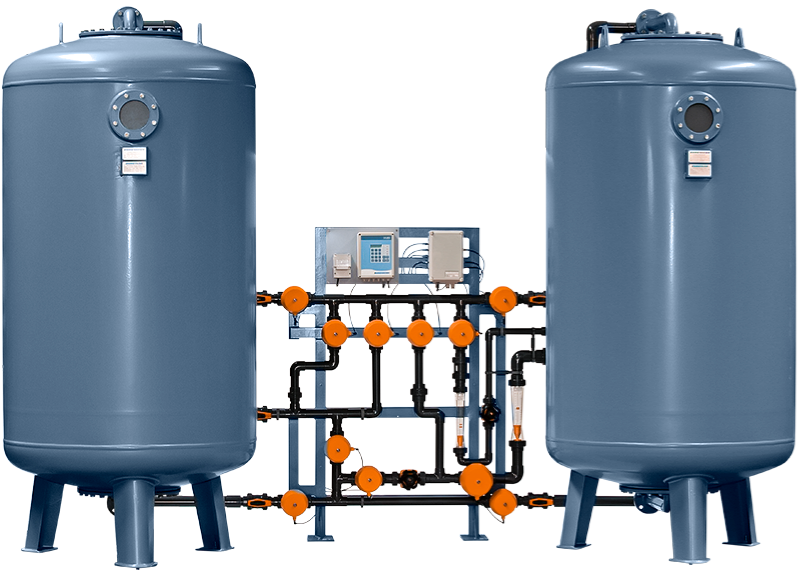
This is where commercial water softeners & filters can play an important role. Depending on the design, a commercial system can help reduce hardness while filtration components address sediment or other specific water-quality concerns.
The key is sizing the system properly. A small unit may struggle under heavy demand, while an oversized system can unnecessarily increase upfront and operating costs.
When Sanitization Becomes Important
Water quality isn’t only about hardness or mineral content. In certain commercial applications, controlling microorganisms is also a major concern.
Food preparation facilities, laboratories, healthcare-related environments, hospitality businesses, and other operations may have specific water-quality requirements. Treatment strategies can include filtration, ultraviolet technology, chemical disinfection, or other approaches depending on the application.
The right method depends heavily on the intended use of the water. Drinking water, process water, and water used for cleaning equipment may have very different requirements.
Understanding Sanitization and Deionization
For applications requiring more specialized water, water sanitization & deionization may be considered as part of a broader treatment strategy.
Deionization works differently from ordinary filtration. Rather than simply trapping particles, ion-exchange technology is used to reduce dissolved ionic substances in water. This can be valuable in applications where low-mineral water is important.
Sanitization, meanwhile, focuses on controlling microorganisms. These two processes address different concerns, so they shouldn’t be treated as interchangeable.
A professional assessment can help determine whether one process, the other, or a combination is appropriate.
Where Water Distillation Fits In
Another treatment method worth understanding is distillation. A distiller heats water to produce vapor and then condenses that vapor back into liquid form. Many impurities are left behind during this process.
For certain specialized uses, water distillers can provide a practical way to produce water with reduced levels of many contaminants. However, distillation can require considerable energy and may not be the most economical choice for large-scale commercial water demands.
That’s why application matters. A treatment method that works well for a laboratory or specialized process may not make sense for a restaurant, office building, or manufacturing facility.
Think About the Entire Water System
Good commercial treatment isn’t just about one machine sitting in a utility room. It’s about understanding how water moves through the facility.
Where does the water enter? What equipment uses it? How much water is consumed during peak periods? Are there seasonal changes? What happens if the treatment system needs maintenance?
These questions may sound basic, but they can prevent headaches later.
For example, a system that performs perfectly during normal business hours may struggle when several water-intensive processes operate simultaneously. Flow rate and peak demand therefore deserve just as much attention as water chemistry.
Maintenance Should Be Planned From Day One
Commercial treatment equipment needs regular attention. Filters eventually require replacement, tanks may need servicing, and control systems should be inspected according to manufacturer recommendations.
A maintenance schedule is especially important for businesses because unexpected equipment problems can disrupt normal operations. Waiting until something fails is rarely the cheapest strategy.
It’s worth asking a provider about service intervals, replacement components, warranties, and emergency support before committing to a system. Those details become much more important once the equipment is actually running.
Balancing Performance and Operating Costs
A good treatment system should solve the water problem without creating a new financial one. Energy consumption, salt usage, filter replacement, wastewater production, maintenance labor, and equipment lifespan can all affect the total cost of ownership.
Looking only at the purchase price can therefore be misleading. A slightly more expensive system may prove more economical over several years if it uses resources efficiently and requires less frequent service.
In other words, think beyond the invoice. The real cost of water treatment is measured over the life of the equipment.
A Smarter Way to Approach Commercial Water Treatment
The best commercial water treatment plan starts with questions, testing, and a clear understanding of the application. Once those pieces are in place, technologies such as softening, filtration, sanitization, deionization, and distillation can be evaluated on their actual benefits.
There’s no need to make the system more complicated than necessary. Sometimes a straightforward solution is exactly what a facility needs. Other situations call for several treatment stages working together.
Ultimately, reliable water quality supports reliable business operations. When treatment is properly designed, installed, and maintained, it can protect equipment, improve consistency, reduce unnecessary maintenance, and give business owners one less problem to chase down during a busy day.