Why Knowing Your Water Quality Matters More Than You Think
We turn on the tap, fill a glass, and rarely stop to think about what’s actually in it. Water is such an ordinary part of daily life that it’s easy to take for granted. But the water entering your home can contain minerals, sediments, chlorine, metals, bacteria, or other contaminants that affect its taste, smell, appearance, and sometimes its suitability for everyday use.
That doesn’t mean every unusual taste or cloudy glass is a reason to panic. Water conditions vary from one community to another, and even neighboring homes can experience different issues depending on plumbing, wells, pipes, and local sources. The sensible approach is to understand what you’re dealing with before spending money on treatment equipment.
What Can Affect the Water in Your Home?
Water can pick up different substances as it travels from its original source to your faucet. Municipal water generally goes through treatment before distribution, while private wells depend heavily on the condition of the well and surrounding environment.
Common concerns include:
- Sediment such as sand, dirt, and rust particles
- Hard-water minerals, particularly calcium and magnesium
- Chlorine and other treatment-related compounds
- Iron and manganese
- Certain metals that can enter through plumbing
- Microorganisms in untreated or poorly maintained water sources
- Naturally occurring minerals that affect taste, odor, or staining
Some issues are obvious. You might notice orange stains around a sink, white scale on a showerhead, or a strange sulfur-like smell. Others aren’t visible at all. That’s one reason appearances alone aren’t enough to judge whether household water is in good condition.
Testing Gives You Facts Instead of Guesswork
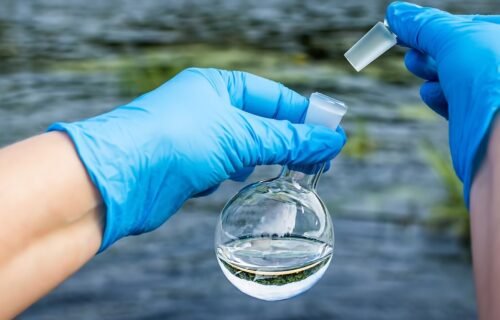
If you’ve recently moved into a home, started noticing changes in your water, or rely on a private well, testing is a practical first step. A free water test can sometimes provide a useful starting point for identifying common concerns and understanding what kind of treatment may be appropriate.
It’s worth remembering, though, that not every basic screening checks for every possible contaminant. The right test depends on the source of your water and the concern you’re trying to investigate.
For example, well owners may need to pay closer attention to bacteria, nitrates, iron, manganese, hardness, and other location-specific concerns. Homeowners using municipal water may instead be interested in understanding hardness, chlorine, sediment, or issues potentially caused by household plumbing.
Testing is less about creating a list of scary-sounding chemicals and more about getting useful information. Once you know what’s actually present, decisions become much easier.
Hard Water Is More Than an Annoyance
One of the most common household water concerns is hardness. Hard water contains elevated levels of minerals such as calcium and magnesium. It isn’t necessarily a health emergency, but it can make everyday chores frustrating.
You may notice spots on dishes, soap that doesn’t lather easily, dry-feeling skin, or crusty buildup around faucets. Over time, mineral deposits can accumulate inside fixtures and appliances, too.
Water softeners are commonly used to address hardness. They work differently from filters designed to remove contaminants, so choosing equipment based on the actual problem matters. A household dealing primarily with hardness doesn’t necessarily need the same system as one concerned about sediment or certain dissolved contaminants.
That distinction gets overlooked quite often. People hear “water treatment” and assume every system does roughly the same thing. It doesn’t.
Good Water Should Work for the Whole Household
When people talk about water quality, they often think only about drinking water. But household water affects much more than the glass sitting beside your dinner plate.
Think about your shower, washing machine, dishwasher, water heater, coffee maker, faucets, and toilets. If the water contains excessive sediment or hardness, those systems and fixtures may show the effects over time.
For instance, mineral deposits can make heating equipment less efficient and contribute to scale buildup. Sediment can also create problems for appliances and plumbing components. And unpleasant odors can make something as simple as taking a shower feel less inviting.
This is why it helps to consider the home as a complete water system rather than focusing on one faucet. A point-of-use filter may be perfectly reasonable for a specific drinking-water concern, while a whole-home solution could make more sense when the issue affects multiple areas.
Choosing a Treatment System Isn’t One-Size-Fits-All
There’s no universal “best” water filtration system. The right choice depends on what is actually in the water, how much water the household uses, the source, available space, maintenance requirements, and your budget.
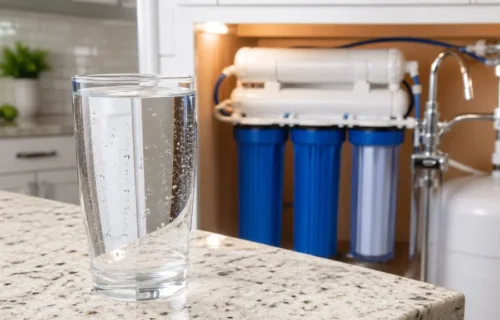
Some systems focus on sediment. Others reduce chlorine or certain dissolved substances. Reverse osmosis systems are often used for specific drinking-water applications, while water softeners are designed primarily to address hardness.
Before buying anything, ask a few straightforward questions:
- What contaminants or minerals are actually present?
- Is the problem throughout the home or only at certain taps?
- Does the system address the specific issue identified by testing?
- How often will filters or other components need maintenance?
- What are the ongoing operating costs?
- Is professional installation recommended?
A little research here can save a lot of frustration later. The fanciest system isn’t automatically the right one.
Pay Attention to Changes in Taste, Smell, and Appearance
Your senses can sometimes provide useful clues. A sudden change in taste, unusual odor, discoloration, or visible particles shouldn’t simply be ignored, especially if the change persists.
At the same time, it’s important not to assume that clear, odorless water is automatically free of contaminants. Some substances cannot be detected by sight, smell, or taste.
If something seems different, investigate rather than guessing. Check whether local water authorities have reported changes or advisories, and consider testing when appropriate. For private wells, routine testing is particularly important because well conditions can change over time due to environmental factors, maintenance issues, or nearby land activity.
Clean Water Starts With Understanding Your Home
There’s something reassuring about knowing what comes out of your faucet. Clean water isn’t simply about having a glass that looks clear; it’s about understanding the source, recognizing potential concerns, and using appropriate treatment when necessary.
Regular maintenance matters, too. Replace filters according to manufacturer recommendations, inspect plumbing when problems appear, and keep private wells properly maintained. If you install a treatment system, don’t forget about it after installation day. Even excellent equipment needs attention to continue performing properly.
And perhaps the biggest lesson is this: don’t buy treatment equipment based on fear or advertising alone. Start with information.
Your home’s water deserves a little attention, but it doesn’t need to become a mystery. Test when appropriate, understand the results, choose treatment for the problem you actually have, and keep an eye on changes over time. It’s a fairly simple approach, and in the long run, it can make everyday life noticeably better—from better-tasting drinking water to fewer stains, less buildup, and greater confidence every time you turn on the tap.