Choosing the Right Water Treatment System for Your Home
Water problems rarely announce themselves with a dramatic warning. More often, they show up quietly—a cloudy glass, stubborn spots on dishes, a metallic taste, or scale collecting around the showerhead. You might notice that your soap doesn’t lather properly or that your favorite appliance seems to need cleaning more often than it should.
The tricky part is figuring out what kind of treatment your home actually needs. There are plenty of systems on the market, and the terminology can feel like a foreign language. Understanding the differences between filtration, softening, and specialized purification can make the decision much easier.
Start by Understanding Your Water
Before buying equipment, it helps to know what you’re trying to fix. Water from a municipal supply can have different characteristics from private well water, and even homes in the same neighborhood may experience different issues because of plumbing or local conditions.
Hardness is one of the most common concerns. Calcium and magnesium can create scale on fixtures and inside appliances. Other households may be more concerned about sediment, chlorine taste, iron staining, or unpleasant odors.
A water test is a useful starting point because it replaces guesswork with information. Once you understand what’s actually present, you can choose treatment equipment that addresses the problem instead of simply buying whatever system happens to be popular.
When Softening and Filtration Work Together
It’s easy to assume one system should handle every water problem. In reality, different technologies are designed for different jobs.
Water softeners primarily address hardness minerals such as calcium and magnesium. Filtration systems, depending on their design, can target sediment, chlorine, certain organic compounds, and other unwanted substances.
For households dealing with several issues at once, softeners & filtration system combinations can be particularly useful. A softener can help control scale, while filtration can improve taste, odor, or clarity. The exact combination depends on the water analysis and the goals of the household.
There’s no prize for owning the most complicated setup. A properly selected system is usually more valuable than an oversized collection of equipment.
What Reverse Osmosis Actually Does
Reverse osmosis, often shortened to RO, is a membrane-based purification process. Water is pushed through a semi-permeable membrane under pressure, allowing water molecules to pass while reducing many dissolved contaminants.
A reserve osmosis system—more commonly called a reverse osmosis system—is often installed at a kitchen sink to produce highly filtered drinking and cooking water. It can be especially useful for people who want an additional level of purification for water they consume.
However, RO isn’t necessarily the best choice for every tap in the house. These systems typically produce filtered water more slowly than a standard faucet and can generate a wastewater stream as part of the process. That’s why point-of-use installation is often practical.
The important thing is to match the technology to the purpose. If your main concern is drinking water, an under-sink RO system may make sense. If you’re trying to reduce sediment throughout the entire house, another type of filtration may be more appropriate.
Whole-House Filtration for Heavier Sediment
Private wells and some other water sources can contain noticeable amounts of sediment. Sand, silt, and other particles may make their way into plumbing and eventually reach fixtures and appliances.
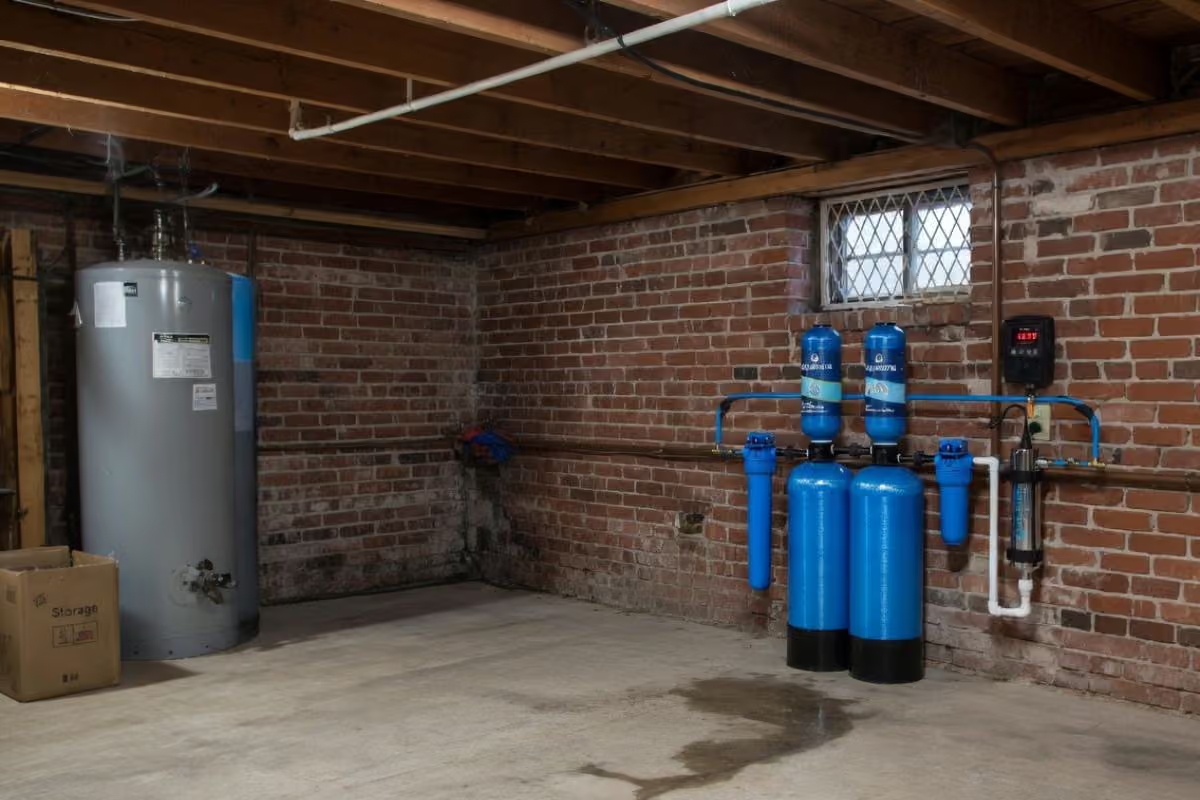
This is where whole house backwashing filters can be useful. Instead of relying on a small cartridge that needs frequent manual replacement, a backwashing filter automatically cleans its media at scheduled intervals by reversing the flow of water.
The specific filter media matters. Different media are designed for different water conditions, so homeowners shouldn’t assume that any backwashing filter will solve every problem. Testing is still the foundation.
A well-designed whole-house system can provide cleaner water throughout the home, rather than limiting treatment to a single faucet.
Think About Maintenance Before Installation
Water treatment equipment isn’t completely maintenance-free. Even high-quality systems need some attention.
Filters may need replacement, softeners may require salt or other maintenance, and automated systems need periodic checks to make sure they are operating correctly. Ignoring maintenance can reduce performance and shorten equipment life.
Before purchasing, ask what routine maintenance involves. How often do filters need to be replaced? Does the system require electricity? How much water is used during regeneration or backwashing? Are replacement parts easy to obtain?
These questions might not be exciting, but they’re the sort of details that matter six months after installation.
Don’t Let Price Be the Only Deciding Factor
A low purchase price can look attractive, especially when you’re comparing several systems. But the initial cost is only one part of the equation.
Consider installation, filter replacements, salt, electricity, water usage, servicing, and potential repairs. A system that costs slightly more upfront may be more economical if it lasts longer and requires less attention.
At the same time, expensive doesn’t automatically mean better. The best system is one that fits the water conditions in your home and delivers the treatment you actually need.
A Practical Approach to Choosing Water Treatment
If you’re unsure where to begin, keep the process simple.
First, test the water. Next, identify the problems you actually want to solve. Then compare technologies based on those problems. Ask installers to explain why they’re recommending a particular system rather than simply presenting a product and price.
It’s also worth considering the layout of your home. A point-of-use system may be perfectly adequate for drinking water, while whole-house treatment makes more sense when the problem affects showers, laundry, appliances, and every faucet.
Think about the future, too. Your water needs may change if your household grows, you renovate the plumbing, or your water source changes.
Better Water Comes From the Right Solution
Water treatment doesn’t have to be complicated. The terminology might sound technical, but the underlying idea is fairly straightforward: find out what’s in your water and choose equipment designed to address it.
Softening, filtration, reverse osmosis, and backwashing systems each have a role. The trick is knowing which role matters in your home.
Rather than chasing the newest technology or buying the biggest system available, start with evidence. Test the water, understand the results, compare long-term costs, and choose a solution that fits your everyday life.
Good water treatment isn’t about having more equipment. It’s about having the right equipment—and knowing why it’s there.