Making Everyday Water Management Smarter and More Efficient
Water is one of those things we rarely think about until something changes. Maybe the faucet starts leaving white marks, the shower glass needs constant cleaning, or the water bill suddenly looks a little too high. These small frustrations can be easy to ignore, but they often tell us something useful about how water is being treated and used at home.
Fortunately, homeowners have more options today than they did a few decades ago. Modern water treatment can address quality concerns, while newer monitoring technology can help families understand how much water they actually use. The trick is choosing what fits your home instead of buying every gadget on the shelf.
Why Water Quality Matters in Everyday Life
Water affects almost everything we do at home. We drink it, cook with it, wash clothes, clean dishes, take showers, and use it in countless little ways throughout the day. So, even a minor water-quality issue can become surprisingly noticeable over time.
Hard water is a common example. Calcium and magnesium can leave mineral deposits around faucets, showerheads, and appliances. Soap may not rinse as easily, and glassware can come out of the dishwasher covered in spots. None of this is particularly dramatic, but it gets annoying.
Before choosing treatment equipment, it’s worth finding out what is actually happening with your water. A basic water test can reveal hardness levels and other characteristics, helping you avoid spending money on a solution that doesn’t address your particular problem.
How Water Softeners Can Help
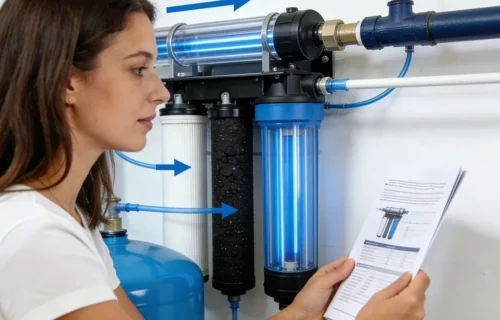
For homes where mineral hardness is the main concern, water softeners can be a useful addition. Unlike a conventional filter, a softener is specifically designed to reduce minerals such as calcium and magnesium that contribute to scale.
The difference may show up in places you hadn’t expected. Faucets can stay cleaner for longer, shower surfaces may require less scrubbing, and dishes can come out looking better. Some households also notice that soap and shampoo feel different because they aren’t interacting with as many hardness minerals.
Still, a softener isn’t a universal answer. It doesn’t replace every type of filtration, and it isn’t necessarily needed in areas where water hardness is already low. Testing first is the sensible move.
The Rise of Smart Water Monitoring
Home technology has become much more connected, and water management is joining the trend. Smart water monitoring systems can provide homeowners with information about water flow and consumption that was previously difficult to track.
Depending on the equipment, a monitoring system may identify unusual usage, provide consumption data, or send alerts when something doesn’t look normal. That can be especially useful when you’re away from home.
Imagine leaving for a long weekend and receiving an alert because water has been running continuously. It could be a leaking toilet, a broken pipe, or something much simpler. Either way, knowing about the problem early can save a lot of trouble.
Finding Water Waste Before It Becomes Expensive
Water waste isn’t always obvious. A dripping faucet is easy to spot, but a slow leak underneath a sink or behind a wall can continue quietly for weeks.
Monitoring technology can help by showing changes in normal usage. If your household typically uses a certain amount of water overnight and suddenly that number jumps, it’s worth investigating.
Even without smart equipment, your monthly water bill can provide clues. A sudden increase doesn’t automatically mean there’s a leak, of course. Maybe guests stayed over, the garden needed extra watering, or the washing machine had a busy week. But unusual numbers deserve a second look.
Combining Treatment With Water Awareness
Water treatment and water monitoring solve different problems, which is exactly why they can complement each other nicely.
Treatment focuses on improving water quality. Monitoring, meanwhile, gives you a clearer picture of how water moves through your home. Together, they can create a more thoughtful approach to household water management.
For example, a family might install a softener to address hardness while using a monitoring device to keep an eye on consumption. Neither system has to do everything. Each simply handles the job it’s designed for.
That’s often a better strategy than searching for one complicated device that promises to solve every water issue at once.
Choosing Equipment With Long-Term Value
Price is naturally one of the first things people consider when buying home equipment. But there’s more to value than the initial purchase price.
Think about filter replacements, electricity use, water consumption during cleaning or regeneration cycles, maintenance, installation, and expected lifespan. A cheaper system can become expensive if it needs frequent replacement or consumes more resources than expected.
Look at the manufacturer’s specifications, but also think about your actual household. A small family with modest water usage has different needs from a large household with several bathrooms.
Getting Maximum Efficiency From Your System
The goal should be maximum efficiency, rather than simply purchasing the most advanced equipment available. A sophisticated system isn’t automatically better if your home doesn’t need all its features.
Efficiency also depends on proper installation and maintenance. A well-designed system that is poorly maintained may gradually lose performance. Filters need changing, sensors should be checked, and mechanical components may require occasional servicing.
It helps to keep a simple maintenance schedule. Mark filter replacement dates on your calendar and pay attention to unusual changes in water taste, pressure, or consumption. These little habits can prevent bigger headaches later.
Small Changes Can Make a Real Difference
Managing household water doesn’t need to become a complicated project. Start with the basics: understand your water quality, identify the problems you actually have, and decide whether treatment or monitoring would provide a meaningful benefit.
For some homes, a softener may be enough. Others may benefit from filtration or smart monitoring. And sometimes the best solution is simply fixing a leak or replacing an old, inefficient fixture.
The important thing is to make decisions based on your home’s needs rather than marketing promises. Water is too important to manage through guesswork.
When the right equipment is installed and maintained properly, the benefits can be surprisingly practical. Cleaner fixtures, fewer mineral deposits, better awareness of water usage, and earlier leak detection can all make daily life a little easier.
In the end, smart water management isn’t about making your home complicated. It’s about using the right tools thoughtfully, wasting less, and taking better care of something your household depends on every single day.