Choosing the Right Water Treatment Approach for Cleaner, More Reliable Water
Water quality is one of those things you notice most when something goes wrong. A strange taste in a glass, sediment around a faucet, an unpleasant smell, or equipment that seems to collect scale far too quickly can all be signs that your water needs a closer look.
For homes, offices, restaurants, manufacturing facilities, and other commercial spaces, choosing the right treatment method isn’t simply about buying the most advanced equipment available. It’s about understanding the water, knowing what needs to be removed, and selecting a system that makes sense for the way that water is actually being used.
That sounds obvious, but it’s surprisingly easy to get wrong.
Start by Understanding Your Water
Before choosing a treatment solution, it’s useful to identify what’s actually affecting the water. Municipal water and private well water can have very different characteristics. Even properties in the same neighborhood may experience differences because of plumbing, storage tanks, or other site-specific factors.
Common concerns include sediment, chlorine taste and odor, hardness, dissolved minerals, microorganisms, and other contaminants. Each requires a different treatment approach.
A professional water test can help identify the issue rather than leaving you to guess. And that matters because a system designed to solve one problem may do very little for another.
In other words, don’t start with the equipment. Start with the water.
Why Commercial Water Filtration Requires Careful Planning
A home filtration system and a commercial installation aren’t necessarily interchangeable. Businesses may use significantly more water, require higher flow rates, and depend on consistent performance throughout the day.
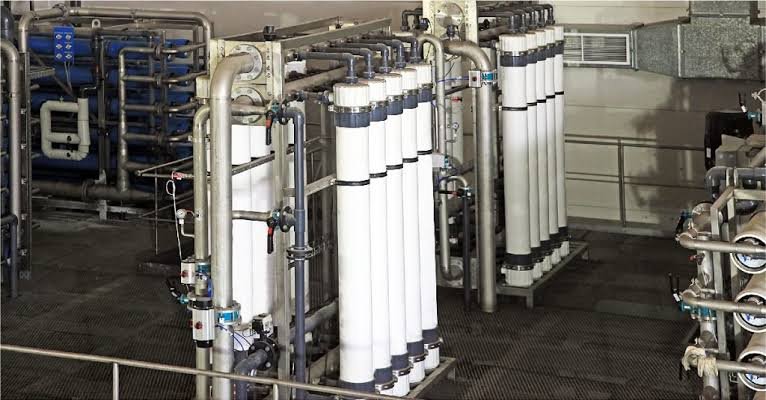
A properly selected Commercial Water Filtration System can help businesses manage specific water-quality concerns while supporting the demands of their operation. Restaurants, hotels, offices, healthcare environments, and industrial facilities may all have different reasons for treating their water.
For a restaurant, taste and odor may be particularly important because water is used in beverages, food preparation, and ice. In an industrial setting, protecting equipment from unwanted substances could matter much more.
The point is simple: commercial water treatment should be designed around the application, not just the size of the building.
Filtration Isn’t One-Size-Fits-All
One of the biggest misconceptions about water treatment is that a single filter can remove everything. In reality, filtration technologies have different strengths.
Sediment filters can help capture particles such as dirt and rust. Activated carbon can reduce certain tastes, odors, and chemical compounds. Other specialized technologies are designed for particular contaminants or water conditions.
That’s why understanding the source water is so important. If you don’t know what’s causing the problem, it’s difficult to know which treatment technology is appropriate.
Sometimes a combination of technologies is the better answer. A system may use several treatment stages, with each one performing a specific job.
When Dissolved Minerals Are the Concern
Some water contains dissolved minerals that aren’t easily removed through ordinary filtration. This is where deionization can be useful for specific applications.
Deionization Systems use ion exchange technology to reduce dissolved ions from water. Depending on the setup, deionized water can be valuable in laboratories, manufacturing processes, electronics production, and other applications where mineral content needs to be very low.
It’s not usually something a homeowner needs simply because tap water tastes different. Deionization is more application-specific, and that’s an important distinction.
For businesses, however, the quality of process water can directly affect production, equipment, and product consistency. In those environments, choosing the right purification technology isn’t a luxury. It can be part of keeping operations running smoothly.
Water Safety Goes Beyond Appearance
Clear water isn’t automatically free from microorganisms. Some bacteria and other biological contaminants cannot be identified simply by looking at a glass of water.
This is one reason disinfection can play an important role in certain water-treatment applications.
Bacteria Disinfection Systems are designed to help control microorganisms through appropriate disinfection technologies. Depending on the application, systems may use methods such as ultraviolet treatment or chemical disinfection.
The correct approach depends heavily on the source water, regulations, intended use, and treatment objectives. For drinking-water applications especially, professional assessment is important because disinfection needs to be reliable, not something you hope is working.
Maintenance Is Part of the System
Even the best water-treatment equipment won’t perform indefinitely without maintenance.
Filters eventually become loaded with material. Membranes require attention. Disinfection components may need replacement or cleaning. Deionization equipment can require resin replacement or regeneration depending on the design.
It’s easy to think about maintenance as an annoying extra cost, but it’s really part of owning the system. Ignoring it can reduce performance and, in some cases, create bigger problems later.
A good treatment provider should explain maintenance requirements before installation. You should know what needs to be replaced, how often it should happen, and who can service the equipment.
Think About Flow, Capacity, and Usage
For commercial applications, another important consideration is water demand.
A system that works perfectly during a quiet morning may struggle when several fixtures are being used simultaneously. Restaurants can experience large demand during meal preparation and service. Hotels have peaks in the morning and evening. Manufacturing facilities may have continuous process-water requirements.
That’s why system sizing matters.
Flow rate, storage capacity, peak demand, pressure, and operating hours should all be considered when designing a commercial treatment solution. Bigger isn’t automatically better, either. Oversized equipment can increase costs without providing meaningful benefits.
The goal is balance.
Don’t Choose Technology Just Because It Sounds Advanced
Water treatment has plenty of impressive-sounding terminology. Reverse osmosis, ultraviolet disinfection, deionization, carbon filtration — it can get confusing quickly.
But sophisticated technology isn’t automatically the right technology.
A simpler filtration system may be perfectly suitable for one application, while another facility may need multiple treatment stages. The right choice depends on the water chemistry and the intended use.
Think of it like buying a tool. You wouldn’t use a power saw to tighten a loose screw just because the saw is more powerful. Water treatment works much the same way.
A Smarter Way to Approach Water Treatment
The best treatment strategy begins with a clear understanding of the problem. Test the water. Identify the contaminants or characteristics that need attention. Consider how much water is being used and what it’s being used for.
Then compare technologies based on performance, maintenance, operating cost, and long-term practicality.
For homeowners, that approach can prevent unnecessary spending. For businesses, it can help protect equipment, improve water quality, and support reliable day-to-day operations.
The Bottom Line
Clean, reliable water doesn’t happen by accident. It comes from understanding the water source and choosing treatment technology that fits the job.
Whether the goal is improving water quality in a commercial facility, reducing dissolved minerals for a specialized process, or controlling microorganisms, the solution should be based on actual needs rather than marketing promises.
Take the time to test, compare, and plan. A well-designed water-treatment system should eventually become something you barely think about — quietly doing its job while you get on with yours.