Most people don’t think much about their plumbing until something goes wrong. A faucet starts dripping. The shower loses pressure. There’s a strange stain around the sink. Maybe the water suddenly tastes a little different. These things seem unrelated at first, but sometimes they’re small clues pointing toward the same issue: the water moving through the house.
Water interacts with pipes, fixtures, appliances, and fittings every day. Its mineral content, pH, temperature, and chemical composition can influence how those materials age. That doesn’t mean every plumbing problem is caused by water, of course. Still, understanding the relationship can help homeowners spot problems earlier and make better decisions about maintenance.
Start With What You Can See
The first clues are often surprisingly ordinary. White scale around a faucet may suggest mineral buildup. A metallic taste could have several possible causes, including contact with plumbing materials. Discoloration in a sink or bathtub might come from minerals, cleaning products, or the plumbing itself.
None of these observations should be treated as a diagnosis. They’re simply reasons to investigate.
A professional water test can provide a much clearer picture. Depending on the source and circumstances, testing may include pH, hardness, iron, manganese, dissolved solids, chlorine, and other parameters. Well-water users may require a broader analysis than households supplied by a regulated municipal system.
The goal is simple: understand the water before deciding what to do about it.
Why Water Chemistry Matters
Every water supply has its own chemistry. Some water naturally contains more calcium and magnesium. Other supplies may have lower pH or elevated levels of certain dissolved minerals.
When people talk about water quality, they’re really talking about a collection of characteristics rather than one single measurement. Taste and appearance matter, but so do chemical and microbiological properties that aren’t visible to the eye.
This is why two homes in neighboring communities can have noticeably different experiences. One family might constantly clean mineral spots from their shower doors, while another barely notices them. A private well can also change seasonally, particularly after heavy rainfall or shifts in groundwater conditions.
Understanding those differences is the foundation of sensible treatment.
The Mystery of Blue and Green Stains
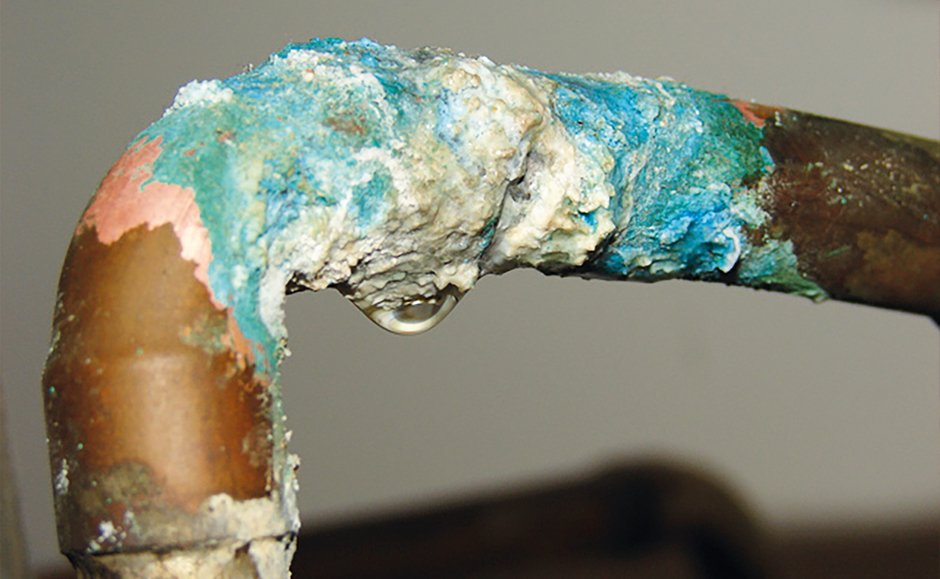
Few household water problems are as visually distinctive as blue-green staining. Homeowners may notice turquoise or greenish marks around faucets, drains, shower fixtures, or the inside of a bathtub.
These stains can be associated with copper compounds and certain water conditions. When water interacts with copper plumbing, particularly under corrosive conditions, copper can enter the water and eventually create colored deposits on surfaces.
But don’t jump to conclusions based on color alone. Cleaning products, existing deposits, and other environmental factors can sometimes produce similar-looking marks.
If the staining keeps returning shortly after cleaning, that’s a good reason to investigate the underlying water chemistry rather than repeatedly scrubbing the same spot.
Copper Plumbing Deserves Attention
Copper has been used in plumbing for decades because it is durable and resistant to many common conditions. Yet no plumbing material is completely unaffected by its environment.
Water that is chemically aggressive can interact with copper over time. The result may include staining, pinhole leaks, metallic taste, or deterioration of plumbing components. The severity depends on several factors, including pH, temperature, dissolved gases, mineral content, and water flow.
This is one reason simply replacing a damaged pipe doesn’t always solve the bigger problem. If the underlying water chemistry remains unchanged, new plumbing can eventually experience similar conditions.
In some cases, correcting the water chemistry may be part of the long-term solution. In others, the plumbing itself may need repair or replacement. Proper diagnosis matters.
What Corrosion Can Look Like
Corrosion isn’t always dramatic. Sometimes it appears as a visible leak, but it can also develop quietly inside pipes.
Corrosion of plumbing may lead to pinhole leaks, weakened fittings, discoloration, or changes in water appearance and taste. Older plumbing systems can be especially vulnerable, although newer installations aren’t automatically immune.
If a home experiences repeated leaks in seemingly unrelated locations, it may be worth asking whether there is a common cause. A plumber can inspect the system, while a water professional can evaluate the chemistry.
The two perspectives can complement each other. Plumbing tells you what the water is doing to the system; water testing helps explain why.
Hardness Isn’t the Same as Corrosion
It’s easy to assume that hard water is responsible for every plumbing problem, but the situation is more complicated.
Hard water contains elevated calcium and magnesium, which can contribute to scale formation. Corrosive water, meanwhile, involves chemical conditions that can cause materials such as copper to deteriorate.
These aren’t interchangeable problems. In fact, simply installing a softener may not address a corrosion issue.
A proper water analysis can distinguish between different concerns and help determine whether treatment is appropriate. Depending on the results, a household might need softening, filtration, pH adjustment, corrosion control, or no treatment at all.
That last possibility is worth remembering. Sometimes the test shows that the water isn’t the culprit.
Don’t Ignore Water Heater Symptoms
Your water heater can provide another useful clue. Sediment and scale may collect inside the tank, reducing efficiency and potentially shortening equipment life.
If hot water develops an unusual taste or color, or if the heater makes popping and rumbling sounds, the unit may need inspection. These symptoms aren’t necessarily caused by water chemistry alone, but mineral buildup can play a role.
Regular flushing and manufacturer-recommended maintenance can help. Homes with particularly mineral-rich water may need more frequent attention.
Again, there’s no substitute for looking at the actual conditions rather than assuming the cause.
When Should You Test Your Water?
Testing makes particular sense when you notice recurring stains, changes in taste or smell, unexplained plumbing problems, or a sudden shift in water appearance.
It’s also sensible after moving into a property with a private well, completing major plumbing work, or noticing changes in a previously stable supply.
For routine household decisions, a certified laboratory or qualified water professional can provide useful guidance on which tests are appropriate. Avoid choosing a treatment system solely because an online advertisement promises to solve a long list of problems.
Water chemistry is individual. Your home’s solution should be, too.
A Little Attention Can Prevent Bigger Problems
Plumbing rarely fails without giving some kind of warning. Sometimes that warning is a stubborn stain. Sometimes it’s a strange taste, a recurring leak, or mineral deposits that seem to return no matter how often they’re cleaned.
Those clues don’t automatically tell you what’s wrong, but they can tell you when it’s time to look closer.
The smartest approach is usually straightforward: observe the symptoms, test the water, inspect the plumbing, and address the actual cause. A good treatment system can certainly help in the right situation, but equipment should follow diagnosis—not replace it.
After all, the pipes in your home are quietly carrying water every day. Paying attention to what they’re telling you can help protect the plumbing, reduce unnecessary repairs, and keep your household water performing the way it should for years to come.